





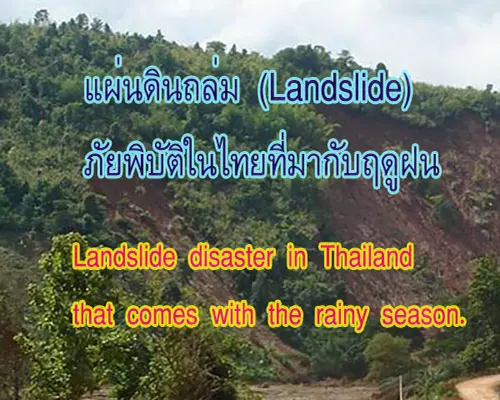
อธิบายการเกิดแผ่นดินถล่มภัยพิบัติในไทยที่มากับฤดูฝน โดยกล่าวถึงปัจจัยการเกิดและแนวทางการบรรเทาภัยจากแผ่นดินถล่ม
ปัจจัยที่ทําให้เกิดภัยพิบัติดินถล่ม ได้แก่ ลักษณะภูมิประเทศ ลักษณะทางธรณีวิทยาและปฐพีวิทยา ลักษณะการใช้ที่ดิน และลักษณะสภาพภูมิอากาศ
The factors that cause landslide disasters are topographical features, geological and soil characteristics, land use characteristics, and climate characteristics.
ภัยพิบัติจากแผ่นดินถล่ม (Landslide)
แผ่นดินถล่ม (Landslide) เป็นขบวนการเกิดเป็นการเคลื่อนที่ของแผ่นดินและวัตถุต่าง ๆ บนพื้นดิน การเคลื่อนที่จะเคลื่อนบนพื้นที่ลาดโดยอาจจะมีน้ำหรือความชื้นเป็นตัวหล่อลื่น ปรากฏการณ์แผ่นดินถล่มเป็นกระบวนการเคลื่อนที่ของแผ่นดินที่ถล่มตัวจากที่สูงลงสู่ที่ต่ำเนื่องจากเกิดการเสียความสมดุลในการทรงตัว ทำให้มีการปรับตัวไหลลงมาตามแรงดึงดูดของโลก
Landslides involve the movement of soil and various objects on the ground. The movement may occur on sloping terrain and may be influenced by water or moisture, providing lubrication. Landslides are characterized by the downward movement of soil from higher to lower elevations due to a loss of balance in the stability of the terrain. This results in the soil adjusting and flowing downward under the influence of gravity.
โดยทั่วไปแผ่นดินถล่มมักจะเกิดเวลามีฝนตกมากบริเวณภูเขา ซึ่งดินภูเขาต้องอุ้มนำไว้ ดินชั้นล่างมีการไหลซึมของน้ำช้ามาก ดินชั้นบนไม่เกาะกันเพราะอิ่มตัวด้วยน้ำ ประกอบกับมีความลาดเทในพื้นที่ระดับหนึ่งจึงจึงเกิดการพังหรือถล่มลงมา
Landslides often occur during heavy rainfall in mountainous regions where the soil on the slopes becomes saturated. The lower layers of soil experience slow water infiltration, while the upper layers, already saturated, lose their cohesion. Combined with a slope in the terrain, this imbalance leads to the collapse or sliding of the soil mass downward.